
In an excellent episode from the third season of the Netflix miniseries, The Crown, Prince Philip is struggling with his role within the British royal family as husband to Queen Elizabeth. Concerned with the public image of the Royal Family and his own personal quest to make a significant contribution to the status and impact of those residing in Buckingham Palace, Philip arranges for a film documentary to be produced as an intimate look into royal life inside the family and the palace. His attempts to control the details of the filming are inconveniently clogged on many occasions, but especially after political turmoil in Greece brings Philip’s estranged mother, Princess Alice, to Buckingham Palace for a stay in spite of vehement protests by Philip.
As the youngest of her three children, Philip was not with his mother as a boy. Princess Alice lived a complicated and difficult life. Although born of royal blood in Windsor Castle, in adult life she suffered schizophrenia and was mistreated barbarically in the infancy of psychiatry by Freud and others, confined to an insane asylum, separated from her family to live a life in exile. It is apparent that royal families do not deal well with mental illness and a young Philip was sent to live with two of his uncles in England. Following a lengthy recovery, Princess Alice resided in Greece, converted to Greek Orthodox Christianity, and became a nun founding a faith and charitable order known as The Sisters of Martha and Mary. Viewed as somewhat of a religious zealot and mystic, estranged from her son Philip and his wife Queen Elizabeth, Alice continued charitable work in the religious order that included sheltering hidden Jews during World War II and serving the poor during the violent overthrow of Greek King Constantine by a military coup in 1967.
After fleeing the dangerous upheaval in Greece, Princess Alice returns to Buckingham Palace on the insistence of Queen Elizabeth. The episode of The Crown picks up the story with Philip’s unsuccessful attempt to keep Alice out of the view of the documentary crew. In spite of Philip’s diligent control of the content in the public image campaign, a journalist who was previously an outspoken critic of the Royal Family interviews Princess Alice. His lengthy article printed on the front page, above the fold, described Alice’s incredible story, calling her “a true saint” and thus accomplishing far beyond what Philip’s film project, a total disaster, could have hoped or imagined.
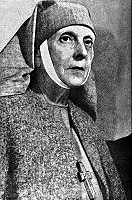
So after this pleasant and unexpected turn of events, there is a beautiful scene when Philip makes his way to Alice’s remote room in Buckingham Palace where he finds her on her knees peacefully praying. He begins the conversation with “I owe you an apology.” Alice responds, “If anyone owes an apology, it’s me.” The brief ensuing dialogue is redemptive and reconciliatory. Later in their time Alice asks her son, Philip, “How is your faith?” Philip’s muted answer, “Dormant.” Alice responds gently, “That’s not good. Let this be a mother’s gift to her child, one piece of advice. Find faith, it helps … no, it not just helps, it’s everything.” The poignant scene closes as Queen Elizabeth peacefully looks out her upper floor, official palace office window seeing her husband, Philip, walking arm in arm with his elderly mother Alice in a touching picture of reconciliation.
Faith is Everything
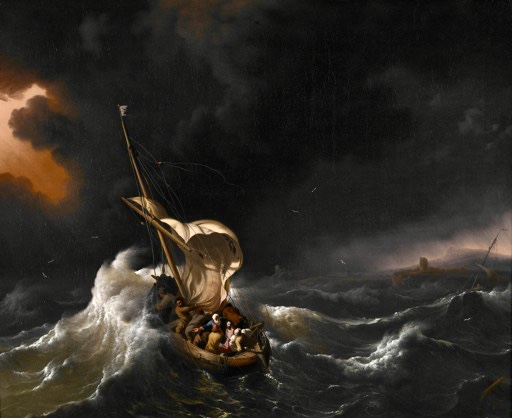
The counsel Princess Alice offered to her struggling son announcing “faith is everything” rings consistent with the words of Jesus found in the unique story of him sleeping in the boat with his disciples crossing the Sea of Galilee in the midst of a swelling storm. Jesus slept while the boat was severely taking on water in the middle of a violent windstorm causing the disciples so much fear of drowning that they woke Jesus crying, “Master, master. We are perishing!” (Luke 8:24) Responding to their desperate pleas, Jesus simply “awoke and rebuked the wind and the raging waves, and they ceased and there was a calm.” (Luke 8:24) Then, turning to those in the boat with him, Jesus asked, “Where is your faith?” (8:25) Notice what Jesus does not do in this case: He does not take a common therapeutic approach by acknowledging their fear, the source of their fear, the obvious imminent danger or their feelings with some comment like “That was a close one, you must have been really frightened.” No, Jesus was minimal and direct by simply asking, “Where is your faith?” (8:25) This singular importance of faith in spite of the storm or unpleasant circumstances is consistent with the declaration of Psalm 23: “Even though I walk through the valley of the shadow of death, I will fear no evil for you are with me.” On the importance of faith, Hebrews 11:6 adds: “And without faith it is impossible to please Him, for whoever would draw near to God must believe that He exists and that He rewards those who seek Him.” Jesus, later in Luke indicated that there is the possibility of greater and lesser amounts of faith by exhorting his disciples in the midst of their anxiety to consider the lilies of the field and remember that “if God so clothes the grass which is alive in the field today and tomorrow is thrown into the oven, how much more will He clothe you, O you of little faith!” (Luke 12:28) And of course in Matthew 17:20 Jesus coaches the disciples by noting their “little faith” and saying, “For truly, I say to you, if you have faith like a grain of mustard seed, you will say to this mountain, ‘Move from here to there,’ and it will move, and nothing will be impossible for you.” (Matthew 17:20) Faith is everything and it grows!
What is Faith?
Our question is what actually is faith and how does it grow?
It is foundational and important to operate with an accurate definition and understanding of faith. Contemporary culture is not a reliable source for embracing the transformational faith, which Jesus and Princess Alice spoke of and wholeheartedly encouraged. Faith, in the Biblical sense, is not like the answer given by the young Sunday school boy when asked, “What is faith?” The boy’s culturally embedded answer was that faith “is believing something you know is not true.” True faith, from the Biblical Worldview, has nothing to do with believing something that is not true nor fails to embrace reality. Actual transformative faith is certainly not giving mental assent to some vague concept or religious idea apart from that which is true and real. Biblical faith is an assurance or confidence blossoming into wholehearted trust, reliance and dependence. To Jesus and Princess Alice, true faith is a relational term. The original languages of the Bible use words for faith starting with belief but quickly move to a more substantive stance characterized by firmness, conviction, steadfastness and confident personal trust. The greater the faith, the greater the trust. Of course, putting great trust in something not true is foolish. Contemporary culture’s insistence on individual’s holding their “own truth” is also foolishly close to the epistemological error of the Sunday School boy’s inadequate definition of faith since true truth does not work that way. Noted theologian J.I. Packer, in his highly acclaimed and widely read book, Knowing God (1973), wrote insightfully with regard to the contemporary cultural confusion over the meaning of faith:
Modern muddle-headedness and confusion as to the meaning of faith in God are almost beyond description. People say they believe in God, but they have no idea who it is that they believe in, or what difference believing in him may make.
J.I. Packer, Knowing God
How is our faith? Who do we have faith in? What difference does it make? The adequate and accurate definition of Biblical faith requires a foundation of revealed truth and personal attention.
Faith Must Have a Reliable Object
There are important principles preliminary to understanding true faith and how it grows. First, faith must have an object. It is ignorant and useless to simply say, “Just have faith.” The question is then, “Faith in what or who?” Trusting reliance and wholehearted dependence is meaningless without an object worthy of such faith. The amount and texture of our faith is in direct proportion to the reliability of the object of our faith. Just as it would be ignorant or foolish to put our faith in a broken down, unreliable chair when we sit, it is just as insufficient to put wholehearted faith in a God who is not actually there! It is important to keep in mind how faith is attached and depending on the object of our faith (God) and not the outcome! Faith is the process of trusting the Lord with all of our heart while the circumstantial outcome is in the hand of a loving, present and faithful God. Think of the faith expressed by Daniel’s friends Shadrach, Meshach and Abednego when on their way to a fiery death in Babylonian furnace for refusing to bow in worship to anyone other than the LORD God they boldly told the misguided King Nebuchadnezzar:
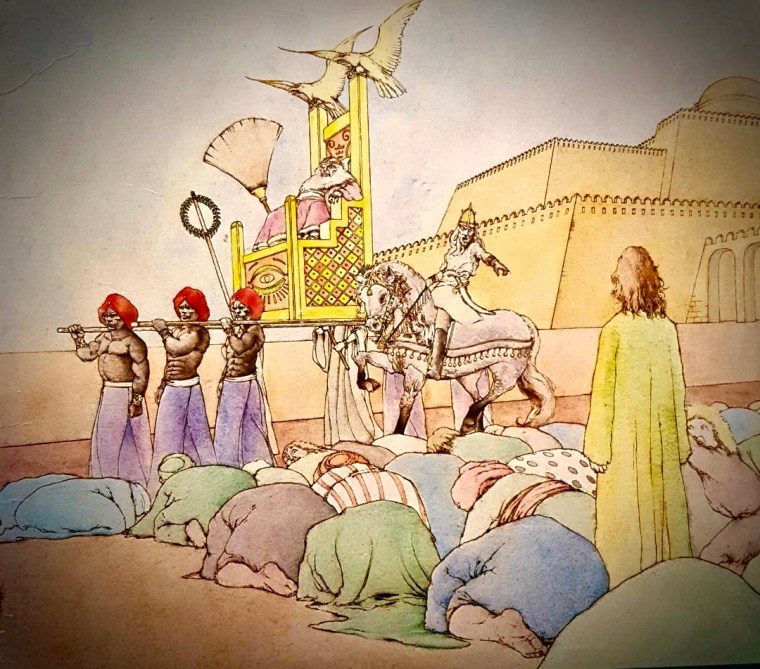
… our God whom we serve is able to deliver us from the burning fiery furnace, and He will deliver us out of your hand, O king. But if not, let it be known to you, O king , that we will not serve your gods or worship the golden image that you have set up.
Daniel 3:16-18
The focus on the Lord as the reliable object of our personal faith is to trust in God while leaving the outcome in His’s providential care. Faith is not a process of our controlling circumstances, but trusting the one who is actually in control beyond our human understanding. There is great wisdom in wholehearted faith and a trust relying on the God who is actually there as revealed in Creation, Jesus Christ and the Scriptures.
True Faith is No Leap
Faith is not some sort of blind leap or forced belief as in the case of our young Sunday school friend. The writer of Hebrews (11:1) describes faith as the assurance of things hoped for and the conviction of things not seen. Assurance and conviction are a position of strength and not a mere blind jump. Since the root of true faith is trust, where does such a strong stance derive? We start with believing something that was most likely not an integral part of our previous belief system. New beliefs are not really a choice. By exposure to information, knowledge or experience we become convinced that something is believable. Although not necessarily a mere choice, some people are more easily convinced than others and thus there are steps and levels of belief. It appears that true faith, fitting the definition of firm trust and great reliance or dependence, is an act of the will based on belief. James wrote in regard to mere mental assent belief not being sufficient by saying, “You believe that God is one; you do well. Even demons believe – and shudder!” (James 2:19) The point James was making is that the nature of true faith is action. When seeing a zipline and harness strung across a wide chiasm over a deep canyon, there is a distinct difference between believing a man or woman of normal size can be strapped in to fly safely across the 400 foot divide and actually having enough faith to personally take the death defying ride! We may believe the set up, the equipment, the construction and the crew are all capable of landing someone safely on the other side, but until we actually choose to harness up and fly, it is merely belief and not faith. We become convinced something is true as a belief, but the moment of surrender and acting on that belief is faith. It is one thing to know that 2 + 2 = 4, but it is quite another to surrender to that objective truth by trusting or having enough faith to use it in all our financial calculations. Being assured and convicted of objective, external truth as revealed in Scripture and in Jesus Christ we surrender with the step of wholehearted trust. Faith is the relational component of belief by embracing the object of our faith in trust, reliance and complete dependence.
Faith Grows When Nurtured
Faith is not static, it grows and the increase of faith produces greater peace and purpose. There is a simple faith that initially saves in child-like trust leading to justification or as Jesus put it to Nicodemus, being “born again” (John 3). It is a singular act in time of surrender with the Lord responding by calling us His children. By grace we are saved through child-like faith (Ephesians 2:10). However, the faith we speak of from Jesus to Princess Alice is a sanctifying faith resulting in the process of spiritual formation and growth. When Jesus exhorted the disciples in the boat, they were already following him, so the challenge was to walk and grow in faith. This call to a robust trust, in spite of the annoying upheavals of life, is our invitation as God’s children to enjoy a fruitful relationship, flourishing in the divine care of the Lord of Creation. On several occasions Jesus, both personally and in his teaching, pointed out the problem of insufficient faith by exhorting his followers with the statement “O you of little faith” (Matthew 8:26; 14:31; 16:8; 17:20; Luke 8:25; 12:28). On the other hand, Jesus praised a centurion’s faith as being greater than what he had seen in Israel (Luke 7:9). In a similar situation Jesus praised the level of faith of a Canaanite woman who deeply trusted him and his power by saying, “O woman, great is your faith! (Matthew 15:28) On at least one occasion the disciples asked Jesus “increase our faith” (Luke 17:5). From the teachings of Jesus, it is clear that increased and mature faith, building on simple saving faith, is certainly the path to flourishing in the light of God’s call. Francis Schaeffer pointed to this truth in his work No Little People (1974) by writing:
Christ, the Light of the World, is to be my light not only on the day of my justification and conversion; He is to be my light existentially, every moment of my life.
Francis Schaeffer, No Little People
John Calvin, in the introduction to his epic work Institutes of the Christian Religion (1559), also noted that in the light of our entire salvation being outside of ourselves and only in Christ Jesus, we therefore obtain what he refers to as a “double blessing” …
the full imputation of righteousness, which goes along with us even to the grave, and the commencement of sanctification, which daily advances at length until it is perfected in the day of regeneration or the resurrection of the body.
John Calvin, Institutes of the Christian Religion
Thus, to Calvin, full imputation of righteousness is born again justification by faith and the commencement of sanctification is the process of the maturation of faith by God’s grace.
Faith Matures by Looking to Jesus
The question is how does true faith grow? Understanding the necessity of the reliability of the object of our faith, the Biblical writer of Hebrews makes it clear that faith grows by intentional focus on Jesus Christ:
Therefore, since we are surrounded by so great a cloud of witnesses, let us also lay aside every weight, and sin which clings so closely, and let us run with endurance the race that is set before us, looking to Jesus, the author and perfecter of our faith, who for the joy that was set before him endured the cross, despising the shame, and is seated at the right hand of the throne of God.
Hebrews 12:1-2
The words used in regard to looking to Jesus, author and perfecter, indicate the unique role Jesus plays is initiating and maturing faith. Spending time in study, reflection and careful consideration of Jesus will expand faith. This is consistent to the conduct of Jesus with his disciples and his invitation recorded in Matthew
Come to me, all who labor and are heavy laden, and I will give you rest. Take my yoke upon you, and learn from me, for I am gentle and lowly in heart, and you will find rest for your souls. For my yoke is easy, and my burden is light.
Matthew 11:28-30
Think of the earlier referenced observation by Jesus seeing the disciples “little faith” (Luke 8:25; 12:28; Matthew 17:20) and note the solution of weak faith was to look to him, seeing who they were with and his more than sufficient ability to handle their greatest problems or threats to their well being. When the Apostle Paul wrote that followers of Jesus “work out their salvation with fear and trembling” (Philippians 2:12) he was urging individual, intentional time, energy and imagination be invested in looking to Jesus as the author of our faith. There is no formula here, but within the framework of Scripture we invest time and focus with the Biblical Jesus. Simply put, in the practiced presence of Jesus Christ, faith grows.
Faith Deepens in the Light of the Scriptures
In order to maximize the presence and focus on Jesus we need reliable sources directing our attention and attachment to the truth. Again, the Apostle Paul serves as a trustworthy guide to deepening our faith when he wrote to the Christians at Rome:
How then will they call on him in whom they have not believed? And how are they to believe in him of whom they have never heard? And how are they to hear without someone preaching? And how are they to preach unless they are sent? As it is written, “How beautiful are the feet of those who preach the good news!” But they have not all obeyed the gospel. For Isaiah says, “Lord, who has believed what he has heard from us?” So faith comes from hearing, and hearing through the word of Christ.
Romans 10:14-17
In the context of hearing, believing, preaching and coming to grips with the powerful Gospel, Paul clearly notes that faith is directly connected to hearing the “word of Christ” as revealed in the Holy Scriptures. Paul further supports this claim in his letter to Timothy:
But as for you, continue in what you have learned and have firmly believed, knowing from whom you learned it and how from childhood you have been acquainted with the sacred writings, which are able to make you wise for salvation through faith in Christ Jesus. All Scripture is breathed out by God and profitable for teaching, for reproof, for correction, and for training in righteousness, that the man of God may be complete, equipped for every good work.
2 Timothy 3:14-17
Encouraging Timothy’s continued spiritual development by nurturing faith, Paul’s clear indication points to the significant role played in the development of faith by the Scriptures! The most significant feature of the Christian faith is its respect and dependence on God’s word. Again, this establishes an individual, intentional time, energy and imagination in the reading, study, teaching and meditation on the sacred writings found in every word of the Bible. All Scripture is inspired by God and profitable in the development and deepening of our faith.
Faith is Exercised in Prayer
Being focused on Jesus in the reliable framework Scripture develops our faith by seeking the powerful company of God Himself. Since “faith is the assurance of things hoped for and the conviction of things not seen” (Hebrews 11:6), then time spent with the Lord in prayer is a genuine act of sincere and effective faith. Conversation with the Lord, petition, praise, gratitude and listening in prayer is a personal exercise the conviction of things not seen … faith! In his brief New Testament epistle Jude connects building faith and prayer in the Spirit by writing:
In the last time there will be scoffers, following their own ungodly passions. It is these who cause divisions, worldly people, devoid of the Spirit. But you, beloved, building yourselves up in your most holy faith and praying in the Holy Spirit, keep yourselves in the love of God, waiting for the mercy of our Lord Jesus Christ that leads to eternal life.
Jude 18-21
The Apostle Paul echoes the value of personal confidence in practicing the powerful presence of Jesus as the source of deep love and faith:
I am not ashamed, for I know whom I have believed, and I am convinced that he is able to guard until that day what has been entrusted to me. Follow the pattern of the sound words that you have heard from me, in the faith and love that are in Christ Jesus. By the Holy Spirit who dwells within us, guard the good deposit entrusted to you.
2 Timothy 1:12-14
In like manner to our focus on Jesus and our particular reliance on the truth in Scripture, lingering faithfully in prayer develops mature faith maximizing personal, intentional time, energy and imagination in God’s presence. There is great mystery in the potential and power of prayer as a dynamic developer of faith. The Lord God has invited us to join him in words of prayer building our faith, embracing His promises while experiencing divine joy, peace and purpose.
Faith and the Great Commandment
Revealed in the Scriptures, recorded dialogues of Jesus, we learn there is a simple, greatest and most important commandment of God:
A lawyer asked him (Jesus) a question to test him. “Teacher, which is the great commandment in the Law?” And he (Jesus) said to him, “You shall love the Lord your God with all your heart and with all your soul and with all your mind. This is the great and first commandment. And a second is like it: You shall love your neighbor as yourself. On these two commandments depend all the Law and the Prophets.”
Matthew 22:35-40 (see Deuteronomy 6:4)
Since the greatest commandment is to love the Lord our God with everything and love our neighbor, then the greatest transgression or sin is to fail to love the Lord and others. In fact, we might observe that all sin is born of the failure to comply with this great command by not loving God enough to ________________ (fill in the blank). Certainly, the original rebellious sin of Adam and Eve not merely eating the forbidden fruit, but actually their failure to love the Lord enough to trust, honor and obey him. In any discussion of loving God, we must remember the Apostle John’s important insight: “We love because He (God) first loved us.” (1 John 4:19) We are in the position of responding to God’s great love for us. The two pillars supporting love in any relationship are respect and trust. Erosion to either of these pillars and a relationship crumbles into oblivion. Elevating the strength and necessity of these two pillars to loving God we recognize that respect for God is reverence (or the “fear of the Lord”) and having a trust worthy of God is faith. How important is growing, nurturing and exercising true Biblical faith? It is how we love the Lord our God with all our heart, mind and soul. Wholehearted trust, reliance and dependence on the Lord, born out of our deep reverence is, in fact, loving God and flourishing in what it means to be human … as well as the definition of Biblical faith.
Faith and the Community of the Cross
Faith stagnates in a vacuum, but deepens, expands and enlarges when exercised within the community of the Cross. Notice, faith is not enhanced in just any faith community, but one focusing faith on the God who is really there as revealed in Creation, the life and finished work of Jesus on the Cross and the Scriptures. The faith of a community is substantive and unified when embracing the Cross, looking to Jesus together, searching the Scriptures and praying in the Spirit. The community of the Cross is distinct and defined as those who understand the power of the Gospel of Jesus for salvation, sanctification and glorification. The Apostle Paul pointed to the value of the community united by the Cross in his first letter to the believers at Corinth:
For the word of the cross is foolishness to those who are perishing, but to us who are being saved it is the power of God.
1 Corinthians 1:18

True faith is in the power of God and grows in the community of the Cross where members flourish because of the finished work of Jesus Christ on the Cross and their faith in him. The community of the Cross is made up of “us who are being saved” by the power of God. A fellowship, not perfect and often messy, formed by God’s mercy and grace to elevate the identity, value and dignity of all who follow Jesus out of brokenness into his Kingdom. The Apostle Paul encouraged the believers in Galatia with a fresh perspective on those who are in the community of the Cross:
For as many of you as were baptized into Christ have put on Christ. There is neither Jew nor Greek, there is neither slave nor free, there is no male and female, for you are all one in Christ Jesus.
Galatians 3:27-28
In Christian community we intentionally nurture our common purpose, higher calling and the increased value of faith to grasp beauty of the Kingdom of God. Dietrich Bonheoffer added,
The Christian needs another Christian who speaks God’s Word to him or her … again and again.
Dietrich Bonhoeffer, Life Together
This “called out” (ekklesia) community is the Church. Not a building or a program, this Church is people in a community of the Cross and, according to brother Bonheoffer, it is God’s idea. The true Church is not a natural community composed of people with common interests, but a supernatural community infused by a truth saturation of the Holy Spirit bringing glory to God. The value of gathering as a contributor to the formation of faith is clear in Scripture:
Let us draw near with a true heart in full assurance of faith, with our hearts sprinkled clean from an evil conscience and our bodies washed with pure water. Let us hold fast the confession of our hope without wavering, for he who promised is faithful. And let us consider how to stir up one another to love and good works, not neglecting to meet together, as is the habit of some, but encouraging one another, and all the more as you see the Day drawing near.
Hebrews 10:22-25
Drawing near with true hearts, full assurance of faith, clear consciences, nurturing our confession of hope by concentrating on the one God who is faithful, stirring one another to love and doing good by the encouragement of meeting together is revealed as God’s idea to illuminate our human identity, belonging and purpose. The Lord is known for injecting his glory into the oddest places: a mountain in the Sinai, a tabernacle in the wilderness, a stable in Bethlehem, a carpenter’s shop in Nazareth of Galilee, an empty tomb near Jerusalem … and even in the Church as his community of the Cross. Where the glory of the Lord resides, faith grows!
Faith and the Well Lived Life
Reverence and faith is the process of wisdom and living well as humans. Created in God’s image, respecting deeply the Lord God by wholehearted, trusting reliance and leaving the outcome in God’s loving providence is the path to human flourishing. The object of such faith is the Lord God, revealed in creation, Jesus Christ and the Scriptures as good, strong and faithful. Eugene Peterson, one of the keenest observers of life and faith, sheds light on the reality of this process when he wrote, “People who live by faith have a particularly acute sense of living in the middle.” This observation notes that creation, beginning in Genesis, was good and the Biblical projection of the ultimate conclusion of history in the Book of Revelation is also good, but due to the negative impact of the early and continuous corruption by rebellion against God, we live in a broken world with broken people trying to make sense of life “in the middle.” Mr. Peterson continued,
Between the believed, but the unremembered beginning and the hoped for but unimaginable ending there are disappointments, contradictions, not-to-be-explained absurdities, bewildering paradoxes – each of them a reversal of expectation.
Eugene Peterson, Reversed Thunder
In the midst of this shattered world, the walk of faith is a wholehearted, intentionally nurtured trust with total dependence and complete reliance in the Lord God who is really there! Elevation above circumstances like the storms, real or imagined, nurturing a trust in the Lord especially when the outcomes are not as we might have scripted is the joy of the Lord, rooted in walking by faith and not by sight. Note how the Apostle Paul agrees with Augustine’s observation that “annoying upheavals are inseparable from human life” while faith provides courage to live wholeheartedly and fully in the light of a guaranteed eternity:
For while we are still in this tent, we groan, being burdened—not that we would be unclothed, but that we would be further clothed, so that what is mortal may be swallowed up by life. He who has prepared us for this very thing is God, who has given us the Spirit as a guarantee. So we are always of good courage. We know that while we are at home in the body we are away from the Lord, for we walk by faith, not by sight.
2 Corinthians 5:4-7
What questions do we ask of this life? Who do we rely on for clear answers? How reliable are the guides we follow in this quest? In the questions of life there are no more reliable sources than Jesus Christ and the Scriptures. In the words of Princess Alice as she reflected on the life and teaching of Jesus: “How is your faith?” After all, it is everything.
Jeff Zippi is a freelance writer living in Templeton, California. His formal education was at Cal State University, Northridge (BA, History), United States International University, San Diego (MA, Education) and Biola University’s Talbot School of Theology (MDiv, Theology). Following graduation from CSUN, Jeff also spent valuable time in 1972 as a Farel House student at the L’Abri Fellowship in Huemoz, Switzerland under the instruction and guidance of Dr. Francis Schaeffer, Os Guiness, Udo Middlemann and Donald Drew. Mr. Zippi served 35 years as a Christian high school teacher in the Humanities (history, political science and theology) before enjoying his current emeritus status and part time teaching Biblical Studies as an adjunct instructor for Eternity Bible College’s satellite campus in Atascadero, California.
 Holy Cross Place
Dear Jeff, reflecting on events of the past, I recalled playing baseball at CSUN my freshman year and in particular, the San Diego Marine base tournament in 1969. After one of the games, the team wanted to head for Tijuana for the evening, but you and Skip and myself stayed back. When the team returned late that night after we had turned off the lights in the barracks, all of a sudden, the team returned, reveling in their activities of the evening. At one point, Rusty Swisher looked across the room at me, and while holding a bottle of alcohol said, “let’s get the rookie to drink this!”. There were a lot of hoops and laughter as Rusty started walking toward me. I just imagined him crashing that bottle against my clenched teeth. My stature of 5’7″ would be no match for the 6’5″ Swisher and time just seemed to freeze. Just as Rusty approached my bunk, without any pre planning known to me, you and Skip Effler stood up between Rusty and myself and in unison, as if you had rehearsed it many times, clearly declared to Rusty, “no you won’t!”. Rusty, paused, stopped and then slowly retreated to his bunk. I was so grateful for the assistance that you two rendered, and have reflected many times that I had witnessed the “administration of angels”, in your conduct. Thanks for such a great, loving service and example. You may not have remembered all of that, as that was the only year I played. In August of 1969, I received a call to serve a two year mission for the Church of Jesus Christ of Latter-Day Saints in Southeast Mexico. It was a marvelous experience, one that continued to shape my life and love for Jesus Christ. In looking you up on the internet, I was not surprised to see the great work you have been involved in throughout your life. Many thanks to you and Skip, not only for your example, but for the rescue that night, many years ago in San Diego. Rod Mortensen
LikeLiked by 1 person
Hi Rod!
I honestly do not remember the incident … it is easy tp remember how much I enjoyed you and being your teammate. I still see Skip occasionally as part of the 1970 National Champion Team reunions and I will pass on this story and your note on to him. Rusty passed away a few years ago … he mellowed in his adult years, but if he were still with us I would be more than happy to give him a bad time about such indefensible behavior!
Thanks for reaching out, the encouragement made my day!
All the best … we’re up in San Luis Obispo County and if you’re ever up in these parts please let me know and lets get together!
Jeff
LikeLike